Orari di visita08:00 AM – 07:00 PM
|Martedì, Dicembre 16, 2025Piazza del Duomo, 20122 Milano MI, Italia
Torna a architecture
engineering
Duomo Engineering – Structure & Materials
How the Duomo stands: rib vaults, buttresses, pinnacles, tiburio and the Candoglia marble supply and care.
11/12/2025
18 min read
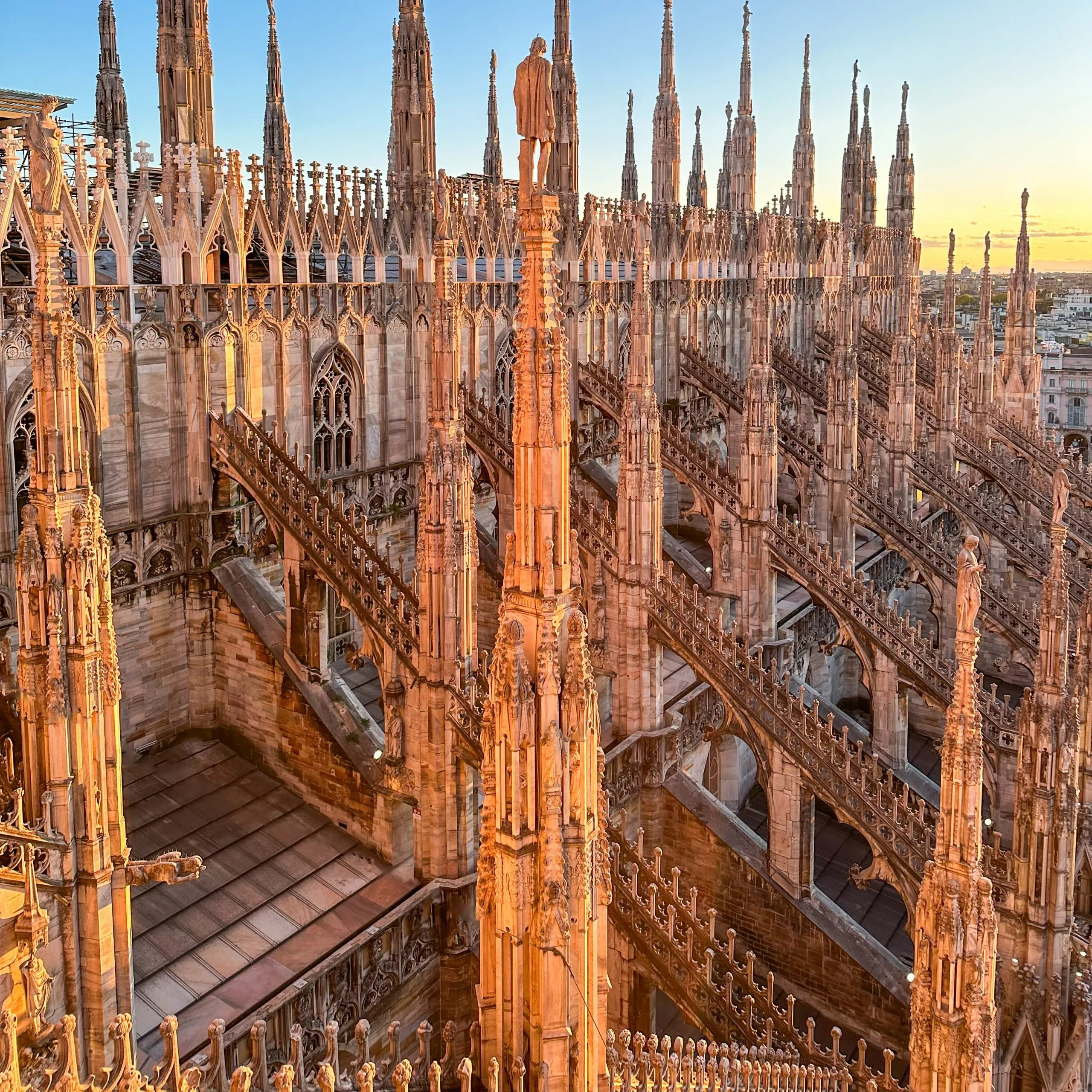
The Duomo behaves as a stone forest: verticals (piers, pinnacles) and diagonals (buttresses) share loads and stiffen the vast nave.
1) Structural Anatomy
| Component | Function |
|---|---|
| Ribbed Vaults | Distribute roof loads to clustered piers |
| Flying Buttresses | Catch lateral thrusts and send them to outer walls |
| Pinnacles & Spires | Add weight where needed and crown drainage points |
| Tiburio (lantern drum) | Stabilizes the crossing; houses access to upper parts |
| Foundations | Depth varies; adapted to historic subsoil and earlier remains |
2) Marble & Weathering
- Candoglia marble is beautiful but sensitive; micro‑fractures and pollution require frequent cleaning and pinning.
- Stainless anchors and discreet ties supplement aged joints during restorations.
3) Access & Safety
- Upper terraces combine stone stairs, narrow passages and guardrails; winter icing triggers temporary closures.
4) The Madonnina
- A gilded copper statue (1774), visible across Milan; lightning protection and maintenance cycles keep her shining.
Bottom Line
Gravity, geometry and a relentless conservation routine make the Duomo both delicate and durable.
Autore

Structural Systems Analyst
Ho creato questa guida per aiutarti a scegliere i momenti migliori, rispettare il luogo e goderti il Duomo senza lunghe attese.
Tags
engineering
Gothic structure
buttresses
spires
marble
Comments (0)
Leave a Comment
Loading comments...